

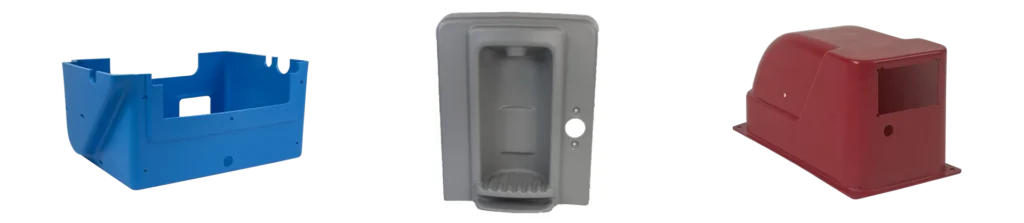
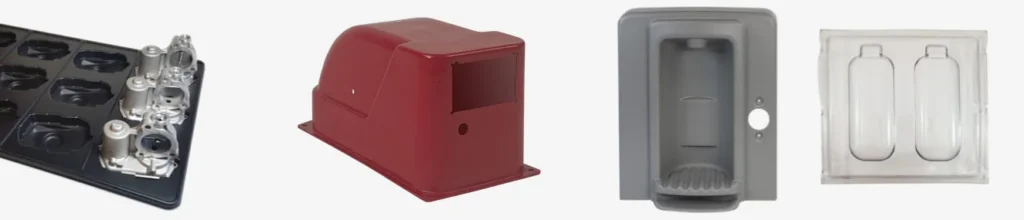
Shirley K's specializes in custom thermoforming for OEM manufacturers. We produce the plastic parts that manufacturers use to assemble their products such as covers, enclosures, shrouds, bezels, guards and other components.
- On time, every time order fulfillment
- Emergency short run specialty equipment
- Responsive customer service
- Finished goods inventory programs
We Also Manufacture a Wide Selection of Stock Products

- Over 100 sizes to choose from
- Attractive high gloss finish
- available in many colors
- Many accessories available
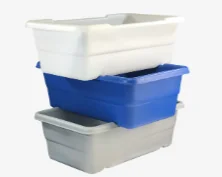
- Suitable for food contact
- Extremely durable
- Temperature tolerant from -76°F to 180°F
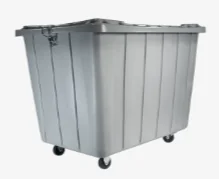
- Extremely durable
- Many sizes to choose from
- Stack-N-Nest, Cross Stack, Divider
- Lids and other accessories
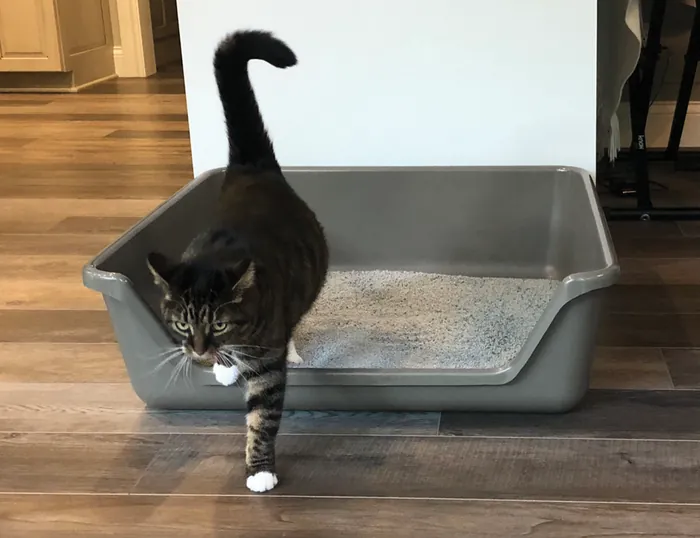
- Contain messes with plastic
- One-of-a-kind designs
- For pets, schools, mud rooms, etc.
- Fluid containers


Ready to Order?
To get a quote for an existing product or to initiate a project for a plastic storage trays and custom thermoformed product click the appropriate box below.
Plastic Manufacturing and Thermoforming: Common Questions
What is thermoforming?
Thermoforming is a plastic manufacturing process in which a thermoplastic sheet is heated until pliable and then formed against a mold. It produces everything from thin packaging to heavy structural components, and is one of the common alternatives to injection molding for larger parts at low to moderate volumes.
What is the difference between thermoforming and injection molding?
Thermoform tooling is typically single-sided and less expensive to build than a matched injection mold, so the fixed tooling cost spread across a program stays lower. Injection molding generally becomes more economical at very high volumes and for smaller parts with thick or intricate geometry.
What is the difference between heavy gauge and thin gauge thermoforming?
Thin gauge thermoforming feeds material continuously from a roll and is typical of packaging. Heavy gauge thermoforming forms pre-cut sheet one part at a time, and is the approach used for enclosures, covers, guards, panels, trays and reusable containers.
Is vacuum forming the same as thermoforming?
Vacuum forming is one method within thermoforming. Thermoforming is the umbrella term for heating and shaping a plastic sheet; vacuum forming achieves that shaping by evacuating the air between the sheet and the mold so atmospheric pressure presses the material into place.
What plastic products are commonly thermoformed?
Common thermoformed products include storage and organizational trays, food handling totes and lugs, material handling containers, reusable shipping and dunnage packaging, and OEM components such as covers, enclosures, shrouds, bezels and guards.
What should a buyer send to get a custom plastic part quoted?
A useful quote package generally includes the part's purpose, approximate dimensions or a CAD file, expected annual volume, target timeline, any material preference, and whether tooling already exists, sits with another supplier, or has yet to be built.
Explore Shirley K’s
Custom Thermoforming
- Custom Thermoforming Services
- Custom Vacuum Forming Services
- Heavy Gauge Thermoforming
- OEM Plastic Parts
- Custom Enclosures & Covers
- Low Volume & Short Run
- Tool Transfer
- Reverse Engineering
- Part Design & Development
- Thermoforming Capabilities
- Thermoforming Materials
- HDPE Thermoforming
- ABS Thermoforming
- Kydex Thermoforming
- Acrylic Thermoforming
- Industries Served
- Reusable Packaging
- Automotive Dunnage
- Ohio Thermoforming Manufacturer
Products
- Organizational Trays
- Plastic Storage Trays
- Compartment Trays
- Classroom Trays
- Tray Slides & Panels
- Tray Sizes
- Food Handling Totes & Lugs
- Meat Trays
- Food Totes
- Heavy Duty Lugs
- TufStack Lugs
- Proofing Boxes
- Frozen Food Totes
- Economy Lugs
- Material Handling Totes
- Stack-N-Nest Totes
- Cross Stack Totes
- Wire Bail Totes
- Divider Totes
- Shipping Totes
- General Purpose Totes
- Ribbed Wall Totes
- Proprietary Products
- Save-A-Spill
- Pet Products
- Wholesale Pet Products
Guides & Resources
- All Resources
- What Is Thermoforming?
- Thermoforming Tooling & Molds
- Thermoforming vs Vacuum Forming
- Thermoforming vs Injection Molding
- Heavy Gauge vs Thin Gauge
- Material Selection Guide
- What Are Food Lugs Used For?
- What Is a Stack-N-Nest Tote?
- Choosing a Stacking Style
- How to Choose Reusable Totes
- How to Choose Storage Trays
- Classroom Tray Sizing
- Thermoformed vs Molded Totes
- The Tool Transfer Process
- What to Send for a Quote
- Food-Contact Buyer Checklist
- Frequently Asked Questions
- About Shirley K’s