

Home › Resources › What Is Thermoforming? How the Process Works
What Is Thermoforming? How the Process Works
Thermoforming heats a plastic sheet, forms it over a tool and trims it into a finished part.
Thermoforming turns a flat thermoplastic sheet into a shaped part. The sheet is heated until it can stretch, shaped against a tool, cooled and trimmed. Choosing the process for an OEM part means looking at geometry, material, finish and production needs.
Heavy-gauge thermoformed parts
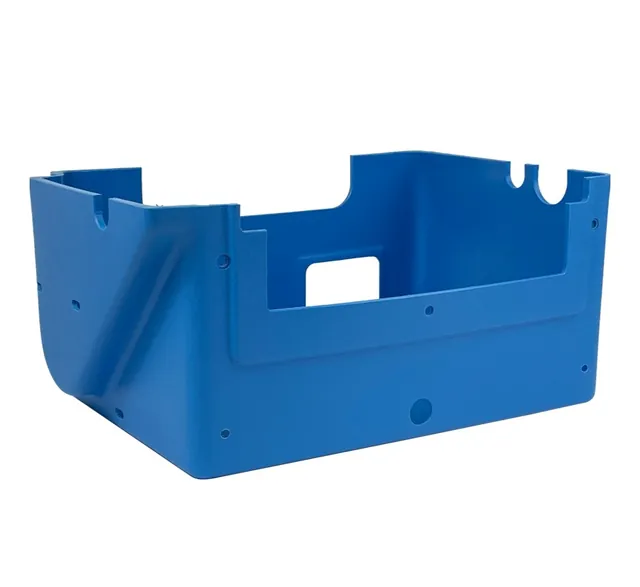
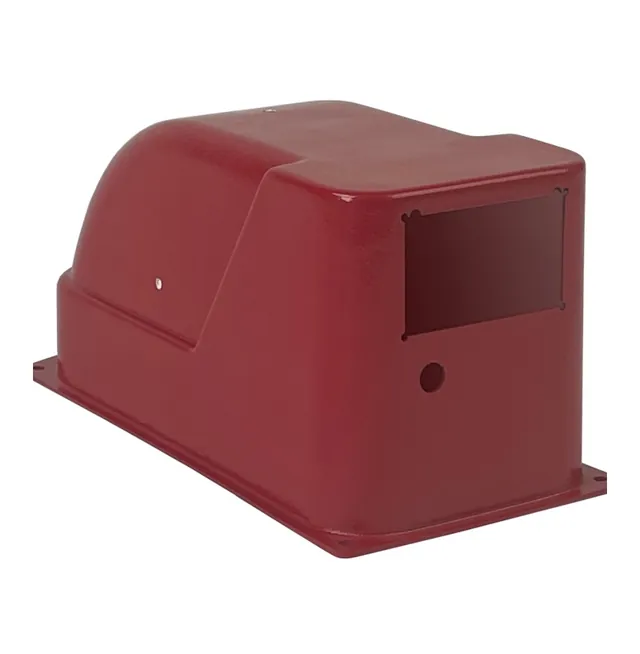
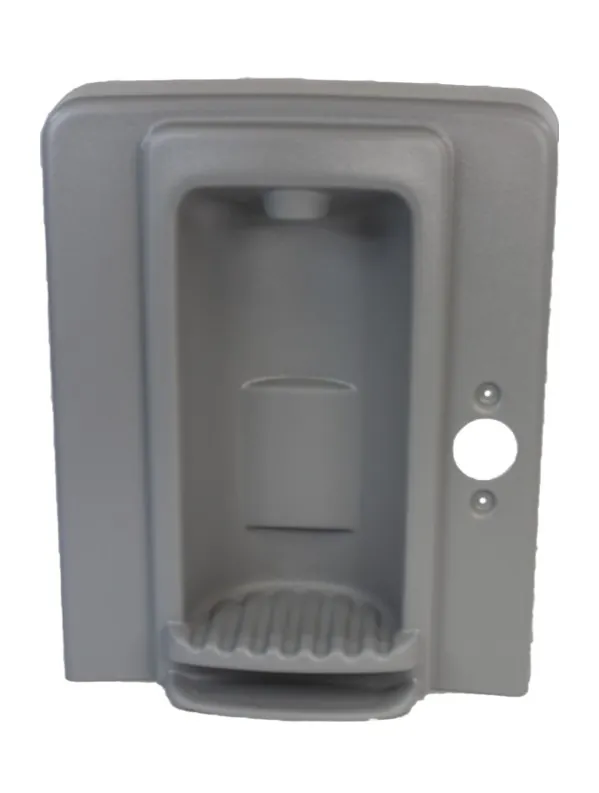
How the sheet takes shape
The sheet becomes the part wall and thins as it stretches. Draw depth, corners and transitions decide where, so finished wall thickness varies across the part.
A vacuum forming cycle
- Heat the sheet. Heat softens the sheet enough to form. The resin and part geometry determine how much heating it needs.
- Form with vacuum. Air is removed between the sheet and tool so atmospheric pressure pushes the sheet against the tool.
- Cool the shape. The sheet cools until it is firm enough to hold its shape during removal.
- Release the part. The part comes off the tool. Draft and geometry affect how easily it releases.
- Trim the edges. Excess material is trimmed away, and specified openings or holes are cut.
Vacuum, pressure and twin-sheet forming
These are general process categories. We vacuum form heavy-gauge parts. Our vacuum forming overview covers that service. The terminology guide explains where vacuum forming fits within thermoforming.
- Vacuum forming. A pressure difference draws heated sheet against a tool. This method is common for covers, trays and housings.
- Pressure forming. Added air pressure pushes sheet against the tool and can reproduce finer surface detail in suitable designs.
- Twin-sheet forming. Two heated sheets are formed and joined during the forming cycle to create a hollow structure.
Heavy gauge and thin gauge
Heavy-gauge work generally uses cut sheets to make durable components. Thin-gauge work usually uses roll-fed sheet for cups, blisters and clamshells. The equipment and production methods differ too. See the heavy-gauge and thin-gauge comparison for what that means when buying parts.
The tool-contact surface
Forming tools are typically single-sided. The surface touching the tool generally picks up its shape and detail most directly. Draft helps the cooled part release, while generous transitions help the sheet stretch more evenly. The tooling guide covers tool orientation, ownership and transfers.
Choose material for the job
Tell us what the part gets hit with, what it’s cleaned with and what it carries. Include appearance and clarity requirements. Resin grades behave differently. Use the materials overview with your drawing to identify what the sheet needs to do.
Common formed parts
Common uses include equipment covers, instrument housings, protective liners, handling trays and panels. Thermoforming often suits parts with a broad surface and an open side. A cover may need a clean visible face and mounting holes. A tray may need pockets that support components during handling. Each job calls for its own geometry and material choices.
Thermoforming and injection molding
A single-sided forming tool typically costs less than an injection mold, making forming attractive for large parts and short runs. Injection molding may fit designs with extensive molded-in features or quantities that justify its tooling. Compare the complete part, including trimming and assembly, with the process comparison guide.
What Shirley K’s makes
We make custom heavy-gauge thermoformed parts for OEMs in Zanesville, Ohio. Our work includes covers, housings, enclosures, trays, tubs, lids, liners and panels. We use 5-axis CNC trimming to cut the perimeter, openings and mounting holes. If you already own a tool, see tool transfer. Send a drawing, CAD model, sample part or tool details. We’ll tell you which material and thickness fit your part.
Thermoforming Questions
How does thermoforming work?
Heat softens a plastic sheet, forming shapes it against a tool, and cooling sets the shape. Trimming removes excess sheet and creates specified openings.
Is vacuum forming a type of thermoforming?
Yes. It uses the pressure difference created by removing air between the sheet and tool.
Will the finished wall have uniform thickness?
The sheet generally thins as it stretches. Geometry and forming conditions affect where it thins, so mark the areas where wall thickness matters.
Can mounting holes be added?
Holes and openings can generally be cut after forming. Locate them from the surfaces or features that control assembly fit.
What should I send to get started?
Send your drawing or CAD model, quantity needs and working conditions. A sample part or existing tool details can also get us started.
Talk to us about your part
Send a drawing, CAD model, sample part or tool details, and we’ll tell you if thermoforming fits.
Call: (740) 868-8140 · Email: orders@shirleyks.com · 1150 Newark Road, Zanesville, OH 43701