

Home › Resources › Heavy Gauge vs Thin Gauge Thermoforming
Heavy Gauge vs Thin Gauge Thermoforming
Both form heated plastic sheet, but they make different products on different equipment.
Heavy-gauge (also called thick-gauge) and thin-gauge thermoforming both shape heated plastic sheet against a tool. They generally make different products and use different feeding, forming and trimming methods. Start with what your finished part must do. Then look at its geometry, order quantities and role in your assembly or packaging operation to find the right process and supplier.
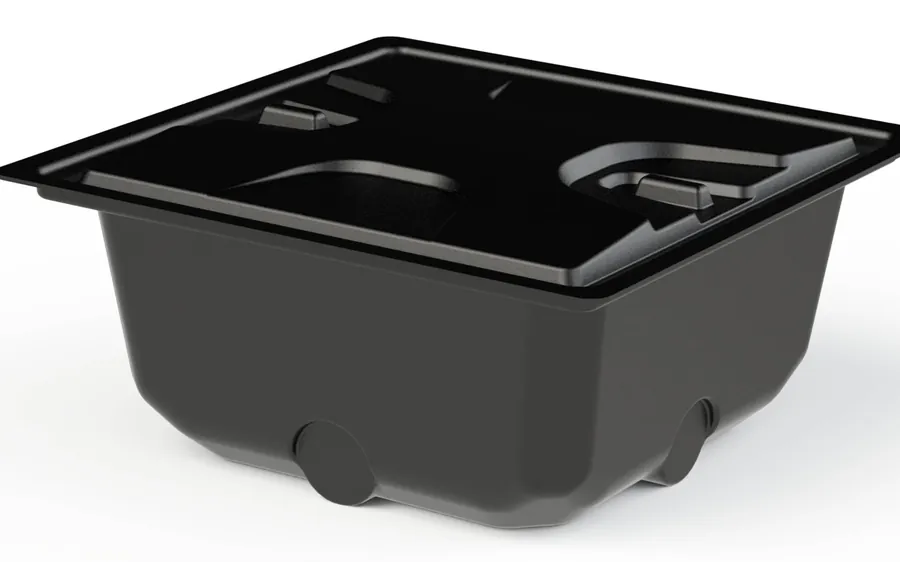
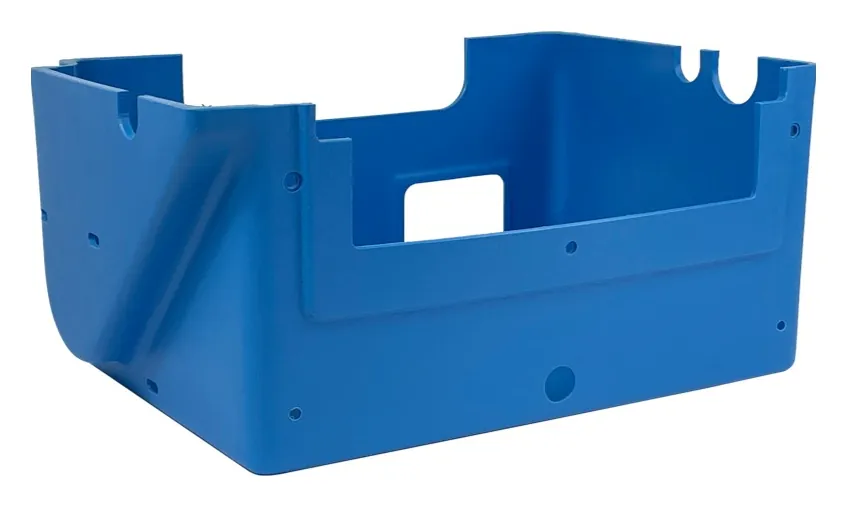
Common thickness ranges
Thin-gauge thermoforming generally uses sheet under about 1.5 mm (0.060 in). Heavy-gauge thermoforming generally uses sheet over about 3 mm (0.120 in). These are common industry conventions, and boundaries vary. For sheet between those ranges, discuss the equipment and intended use with the supplier.
Thick-gauge thermoforming is another name for heavy-gauge work. Sheet stretches during forming, so wall thickness can vary across the finished part.
Use thickness to narrow your options, then compare part function, dimensions, geometry and production needs. The basic process guide explains heating, forming, cooling and trimming.
Heavy gauge and thin gauge compared
These are typical patterns. Cavity count, automation and trimming vary by part and supplier. Both processes shape heated sheet with tooling and need forming and cutting operations that work together.
| Comparison | Thin gauge | Heavy gauge |
|---|---|---|
| Sheet format | Usually roll-fed sheet | Usually individual cut sheets |
| Typical products | Packaging such as clamshells, blisters and cups | Durable covers, housings, trays and panels |
| Typical volumes | Often repetitive, higher-volume production | Often lower-volume OEM work, with larger volumes possible |
| Tooling | Often multiple cavities for repetitive packaging production | Often individual larger parts or fewer cavities |
| Trimming | Often part of the production line, using dedicated cutting tools | Often separate, using routing or CNC trimming |
Choose a process for the part
A disposable retail clamshell generally fits a packaging thermoformer with roll-fed equipment. A machine cover generally fits a supplier making durable components from cut sheet. Similar shapes can have different requirements, especially when a part locates or supports other hardware.
A lightweight tray insert and a tray for repeated handling may need different materials, walls and production methods. Describe the load, contact areas and handling sequence. The dunnage tray overview covers reusable handling applications.
- Describe the job. Tell us if the part holds a packaged product, protects equipment, supports components or forms a visible machine surface.
- Show the geometry. Send overall dimensions, draw depth, pockets, openings and the surfaces that mate with other components.
- Explain how it’s used. Describe handling, loads, cleaning and environmental exposure so we can assess material and wall requirements.
- Give order quantities. Share expected order quantities and repeat demand so the supplier can assess the production method.
- Show the finished part. Mark trimmed edges, mounting holes and appearance requirements. Include any assembly work needed after forming.
Quote the finished part
Include tooling, trimming and assembly when choosing a process. A simple shell can still need several cutouts and carefully located mounting points. Show those features in your quote request so the supplier prices the part you expect to receive.
Material affects impact behavior, clarity and resistance to working conditions in both categories. Use the materials overview and describe the conditions your part will face.
Comparing thermoforming with injection molding is a separate decision. Thermoforming tooling is typically single-sided and costs less than an injection mold, often making it suitable for large parts and short runs. The injection molding comparison covers that tradeoff.
What Shirley K’s runs
We make custom heavy-gauge thermoformed parts for OEMs, including covers, housings, enclosures, trays, tubs, lids, liners and panels. Dozens to hundreds of parts per order is our core work. We also run larger volumes.
Quick change-over shuttle machines handle low volumes, and rotary machines run larger volumes. We form sheet from .080″ to .450″ thick and trim formed parts on 5-axis CNC. A packaging thermoformer is usually a better fit for thin-gauge packaging. Send us a drawing, CAD model, sample part or tool details for your durable OEM component.
Heavy vs Thin Gauge Questions
Are the thickness boundaries strict?
No. They are common industry conventions, and usage varies. Confirm equipment fit with the supplier using your actual part requirements.
Does heavy gauge always mean a stronger part?
No. Thickness affects stiffness and load behavior, and material and geometry matter too. Check the finished part under its intended conditions.
Can both processes make trays?
Yes. The tray’s job, load, material and production needs determine which process fits.
Does a larger order mean thin-gauge work?
No. Durable heavy-gauge parts also run in larger volumes. Quantity matters alongside design and use.
Should I specify starting sheet thickness?
Send it if you’ve already defined it, along with finished-wall requirements that matter to the part’s function. We can help pick the material and sheet thickness from your part requirements.
Quote a heavy-gauge part
Send a drawing, CAD model, sample part or tool details.
Call: (740) 868-8140 · Email: orders@shirleyks.com · 1150 Newark Road, Zanesville, OH 43701