

Thermoformed vs Injection Molded Totes
Reusable plastic totes are made two main ways: thermoforming and injection molding. Both produce durable totes, but they differ in durability characteristics, tooling cost, lead time, and the volumes where each makes economic sense. This guide compares the two so you can choose the right tote for your operation.
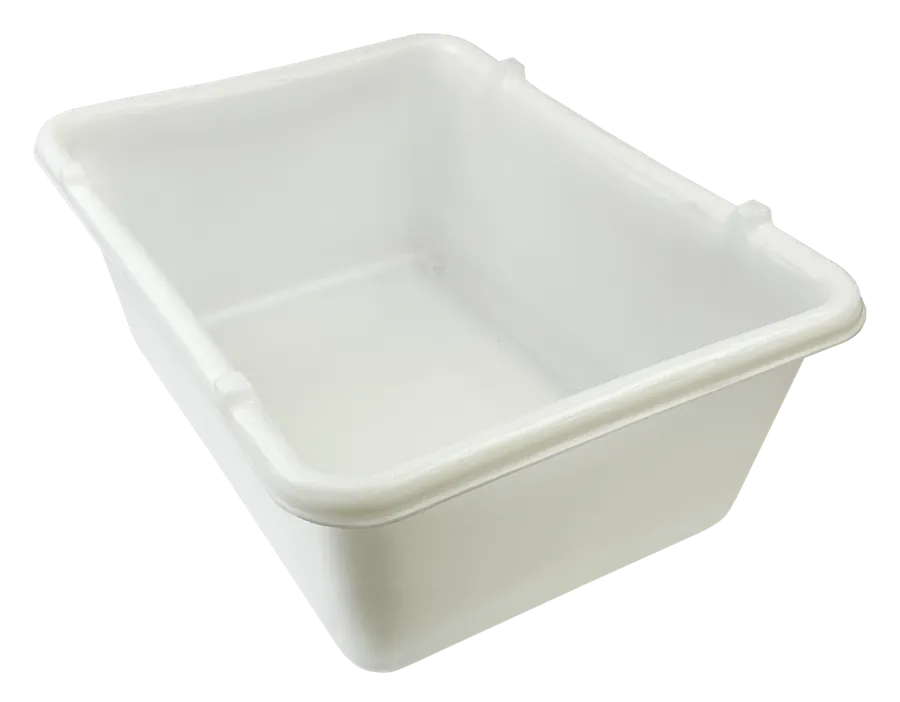
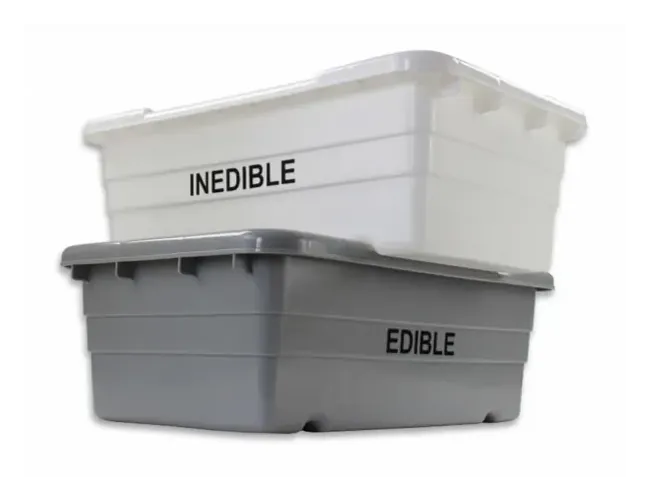
THERMOFORMED TOTES
Thermoforming heats a flat plastic sheet until pliable, forms it over a mold, then trims it to shape. For totes this means:
- Material: our totes are formed from HMW-HDPE — a tough, impact-resistant, recyclable resin. Thermoformed HMW-HDPE is more durable than injection-molded polypropylene.
- Lower tooling cost: thermoforming tools are simpler and significantly less expensive than injection molds.
- Shorter lead times: tooling develops faster than injection molding.
- Volume fit: economical for the low-to-medium volumes typical of reusable tote programs.
- Large-part capability: well-suited to large totes and trays.
INJECTION MOLDED TOTES
- Higher tooling cost: injection molds are complex and expensive, which raises the up-front investment.
- Best at very high volume: the tooling cost amortizes only across large production runs.
- Tight detail: well-suited to fine features and high repeatability.
HOW TO CHOOSE
- Choose thermoforming for durable reusable totes at low-to-medium volume, lower tooling cost, and faster lead times.
- Choose injection molding when you need very high volumes and fine detailed features that justify the tooling investment.
GET STARTED
Request a quote or start a custom project:
Call: (740) 868-8140 Email: orders@shirleyks.com
Engineered for Extreme Duty
Why thermoformed HMW-HDPE totes outlast injection-molded totes in cold, high-impact, and washdown service — the material science behind the difference.
Stays tough in the cold
Long, entangled polymer chains keep the material ductile in freezer and deep-cold service. A dropped tote dents instead of shattering — contents stay contained.
High impact resistance
Biaxial molecular orientation and near-zero residual stress spread impact across the whole part, not along one weak axis.
Resists chemical stress cracking
High ESCR stands up to sanitizers, animal fats, oils, and repeated washdowns — without the spider-web surface cracks common to injection-molded totes.
Safe, ductile failure
Instead of sudden brittle shattering (and sharp shards in food), HMW-HDPE flexes and dents while keeping its shape and containment — a higher safety margin for cold-chain and food.
| Property | Shirley K’s Thermoformed (HMW-HDPE) | Standard Injection-Molded HDPE |
|---|---|---|
| Molecular structure | Long, entangled chains — biaxial reinforcement | Shorter chains — primarily one direction |
| Residual stress | Near zero (low-pressure forming) | High (locked in by rapid cooling) |
| Cold-impact behavior | Ductile — flexes, dents, recovers | Brittle — sudden cracking near/below freezing |
| Chemical stress-crack resistance | Excellent ESCR | Moderate — accelerated by cold + chemicals |
| Failure mode | Visible denting, stays contained | Sudden shatter — possible shards |
Evaluated against recognized ASTM methods (D256 Izod impact, D746 brittleness temperature, D1693 / F2136 stress-crack resistance). Resin technical data sheets available on request — request specs or a quote.