

HDPE Thermoforming in HMW-HDPE
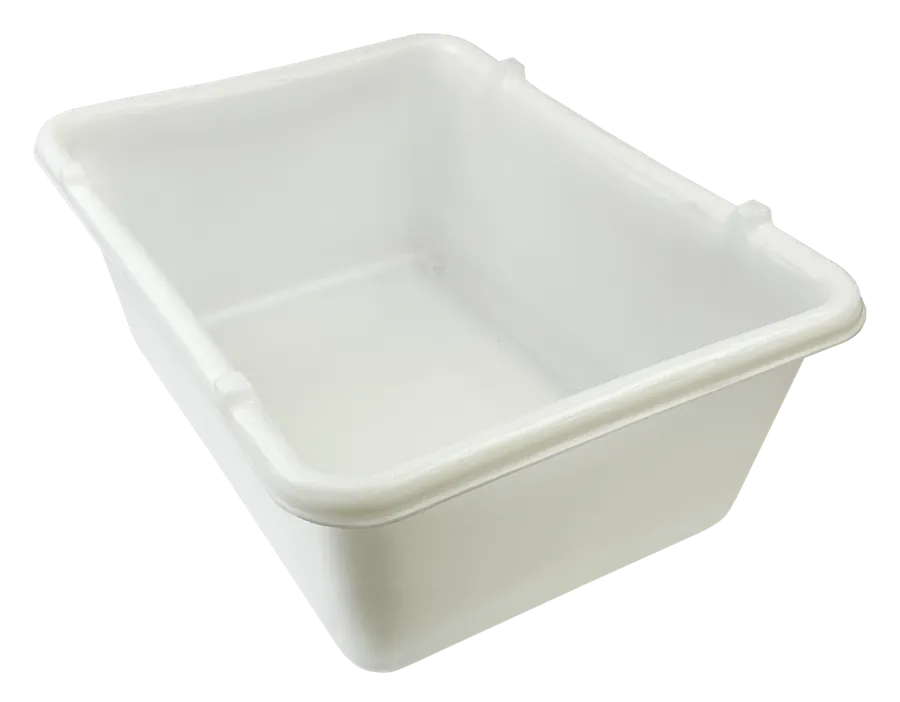
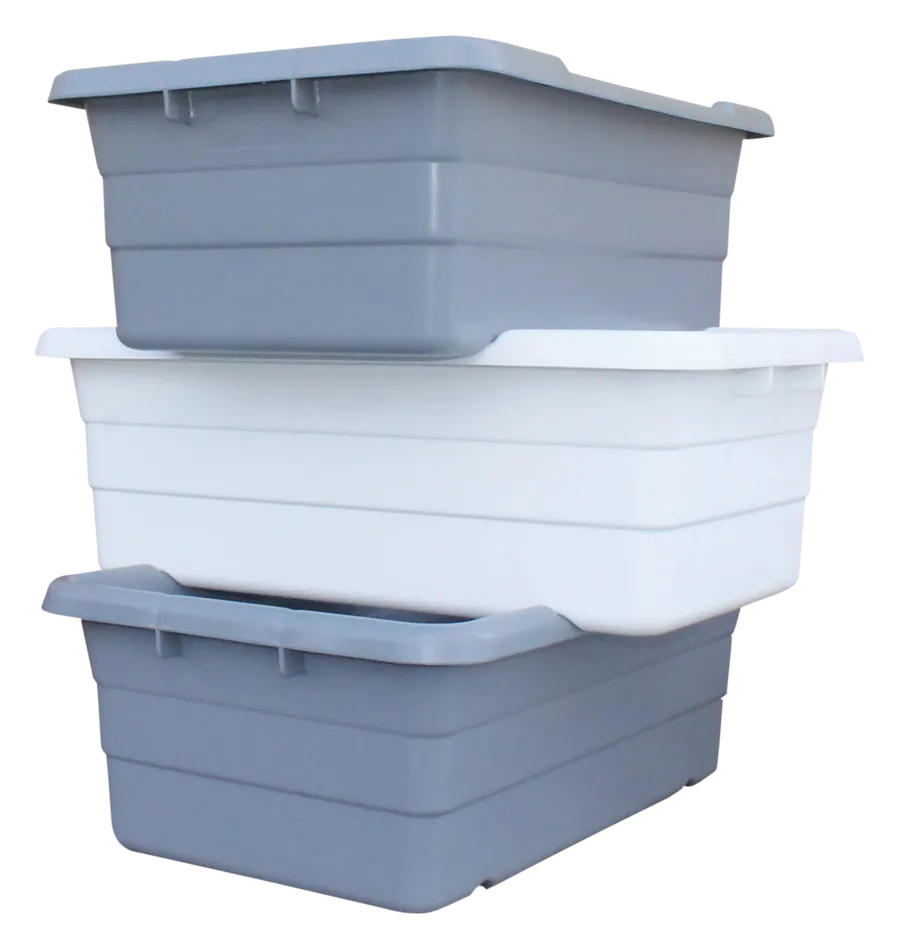
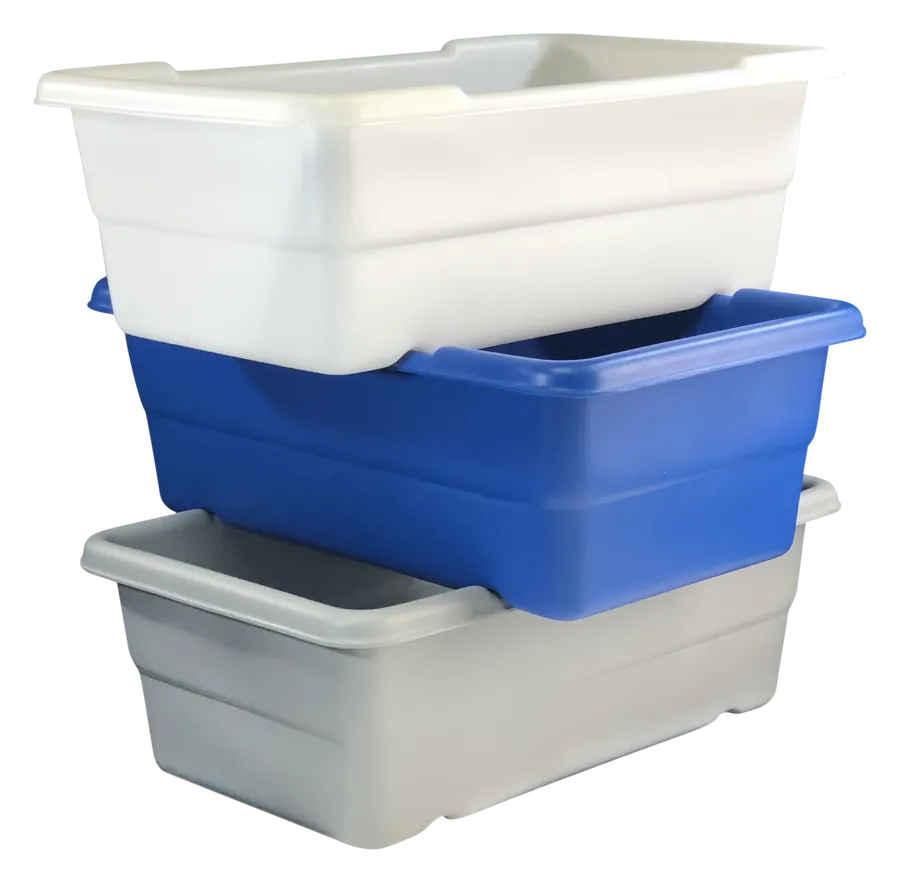
Every HDPE part we thermoform is HMW-HDPE, the tougher grade behind our totes, lugs and returnable dunnage.
- All HMW-HDPE
- Totes, lugs and dunnage
- 5-axis CNC trimming
- Made in the USA
All the HDPE we thermoform is HMW-HDPE. Injection-molded HDPE parts typically use higher-flow HDPE grades, because an injection mold needs resin that flows easily. Tell us what your part must carry, cover or protect, and send your drawing, CAD model, sample part or tool details. We’ll tell you which thickness fits.
HDPE and HMW-HDPE
HDPE is high-density polyethylene, a thermoplastic commonly used for toughness and moisture resistance. Thermoforming heats a sheet and shapes it against a tool. The part cools, then excess material is trimmed away.
HMW-HDPE is high-molecular-weight, high-density polyethylene. Its longer polymer chains generally make it tougher and more impact-resistant than standard HDPE. That helps with repeated handling and knocks. If you know the required grade, put it on the drawing.
Thermoforming heats a whole sheet before it is formed, so the sheet has to hold together while it is hot. The higher molecular weight of HMW-HDPE gives it the melt strength to do that, which is one reason heavy-gauge HDPE sheet is commonly HMW-HDPE. Injection molding works the other way. The resin has to flow into a closed mold, so molding grades are made to flow easily.
Material properties
- Handling. Polyethylene generally tolerates bumps and flexing. Part shape and local wall thickness affect how it responds.
- Moisture and chemicals. HDPE generally resists moisture and many chemicals. Tell us which substances it encounters and under what conditions.
- Stiffness and support. Broad surfaces may need ribs, contours or support from the assembly to limit flexing.
- Fastening and finish. Polyethylene is generally difficult to bond or paint without preparation. Tell us how you’ll attach it and what finish you need.
Where we use HMW-HDPE
Thermoformed HMW-HDPE is commonly considered for trays, tubs, liners and protective covers that face repeated impacts. Thickness and shape depend on loads, support points and working conditions.
Our food-handling totes and lugs, material-handling totes and returnable dunnage use recyclable HMW-HDPE. It is suitable for food contact applications and performs from -76 °F to 180 °F. See our returnable dunnage trays for parts that carry components between operations or shipments. Tell us how the contents sit, how operators lift the container and what happens when it’s empty.
Forming and trimming
HDPE vacuum forming uses a pressure difference to draw heated sheet against a tool. The sheet stretches, so wall thickness usually varies across the part. Show us deep features and abrupt transitions. Draft and rounded transitions generally help the sheet form and the part release.
Polyethylene shrinks as it cools. Tool design, cooling and part shape affect the final shape. Mark the surfaces that locate the part in your assembly and the edges that must clear nearby components.
Mark holes, cutouts and mating edges on your drawing. Our part design and development page explains what to send.
Thermoformed HMW-HDPE compared with injection-molded HDPE
Many HDPE parts are injection molded, usually from higher-flow grades that fill a closed mold easily. The table compares a thermoformed HMW-HDPE part with a part molded from a typical higher-flow grade. Some injection-molding grades are engineered for toughness and stress-crack resistance, so compare the specified grades for your part. See thermoforming vs injection molding and thermoformed vs injection-molded totes for more.
| Consideration | Thermoformed HMW-HDPE | Injection-molded HDPE, typical higher-flow grade |
|---|---|---|
| Resin | High-molecular-weight HDPE sheet with long, entangled polymer chains | A grade made to flow into a closed mold, usually with shorter chains |
| Toughness | Generally tougher and more impact-resistant | Generally lower impact strength than HMW-HDPE |
| Stress cracking | Higher molecular weight generally improves resistance to stress cracking from cleaners, oils and fats | Generally more prone to stress cracking under load and chemical exposure |
| Tooling | A single-sided forming tool, typically less costly than an injection mold | A two-sided mold, typically a larger up-front cost |
| Order size | Runs of dozens to hundreds are practical | Usually needs high volumes to pay back the mold |
| Part shape | Large parts with broad surfaces and an open side | Parts with molded-in detail such as ribs and bosses |
What to send for a quote
You can move your current tool to us, send a tool design or send a part design. We can also reverse engineer a tool from an existing part. Our quote preparation guide explains what to gather.
- Send what you have. Send a drawing, CAD model, sample part or tool details, plus your expected order quantity.
- Describe working conditions. Tell us what the part carries, how it’s handled and what chemicals or repeated impacts it faces.
- Mark mating features. Show mating edges, support points, holes and features that control stacking or component location.
- List material requirements. Send your material specification, or tell us what the material needs to do.
HDPE Thermoforming Questions
Are HDPE and HMW-HDPE interchangeable?
Don’t substitute one for the other without checking the specified grade and part requirements. HMW-HDPE generally offers greater toughness and impact resistance, and it is the only HDPE we thermoform.
Which material does Shirley K’s use for totes?
HMW-HDPE, for our food-handling totes and lugs, material-handling totes and returnable dunnage. All the HDPE we thermoform is HMW-HDPE.
Can you replace an injection-molded HDPE part?
Often, when the part has broad surfaces and an open side. Send the part or drawing and your quantities. We can reverse engineer a tool from an existing part and form it in HMW-HDPE.
Is HMW-HDPE recyclable?
The HMW-HDPE we use is recyclable. Recycling options depend on the receiving program and the material’s condition.
Can you add holes and cutouts after forming?
Yes. We offer 5-axis CNC trimming for repeatable trim and hole patterns. Send their locations and show how they line up with adjoining components.
Can I get a quote without a CAD model?
Yes. Send a drawing, sample part or tool details. We can also reverse engineer a tool from an existing part.
Does Shirley K’s handle smaller orders?
Dozens to hundreds of parts per order is our core work, and we also run larger volumes. Send your expected order quantity.
Quote an HMW-HDPE part
Tell us what the part carries and how it’s handled.
Call: (740) 868-8140 · Email: orders@shirleyks.com · 1150 Newark Road, Zanesville, OH 43701