Acrylic Thermoforming & Vacuum Forming
Clear acrylic covers, housings and panels for OEMs, formed and CNC-trimmed in Zanesville, Ohio.
- Optical clarity
- Covers and panels
- 5-axis CNC trimming
- Made in the USA
Acrylic thermoforming suits OEM parts where the view through the plastic matters. Acrylic is often chosen for clarity and surface appearance, with impacts and mounting details guiding the choice. At Shirley K’s, we use acrylic for custom parts that need clarity or specific mechanical properties. Send the part shape and explain viewing, handling and assembly requirements so we can discuss material and thickness.
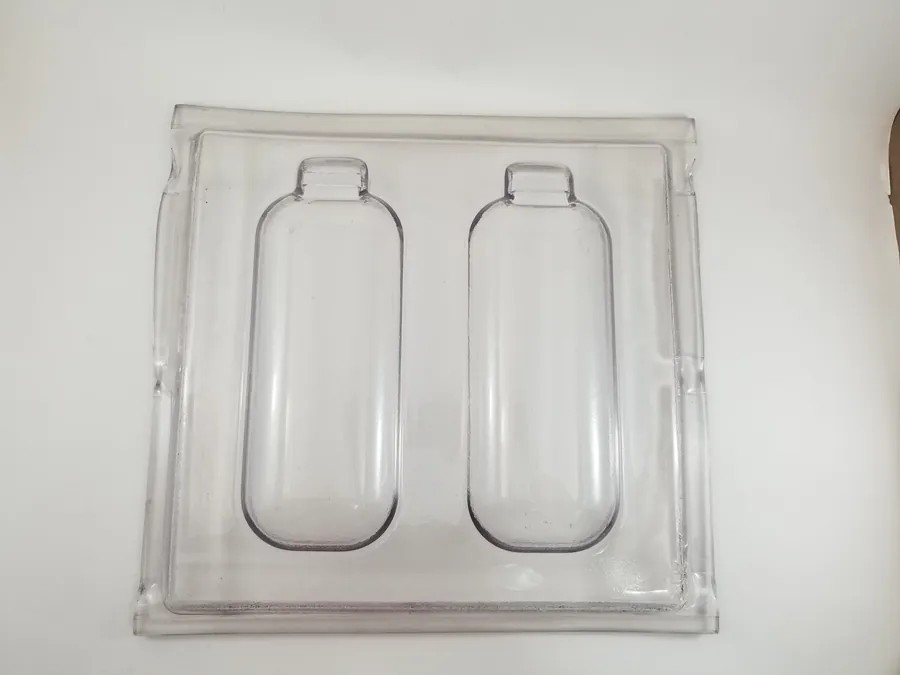
What acrylic offers
Acrylic, also called PMMA, is a thermoplastic known for optical clarity. It comes in clear and colored sheet. It generally resists surface scratches well, and it is more brittle under impact than tougher sheet such as PETG or ABS.
A cover protected from knocks faces different demands than an exposed cover handled throughout a shift. Shape matters too. Curves, wall thickness changes and surface condition can affect the view through the part.
Where acrylic fits
- Display covers. Formed covers suit displays where visibility and surface appearance matter.
- Viewing housings. Clear housings show equipment or contents when impact and exposure conditions fit the material.
- Lighting components. Acrylic is often used for formed lighting covers. Sheet choice and shape affect light transmission and appearance.
- Shaped clear panels. Formed panels follow assembly contours where a flat viewing panel won’t fit.
How we use acrylic
Our custom heavy-gauge work includes covers, housings, enclosures, trays, tubs, lids, liners and panels. See our heavy-gauge thermoforming page for more about the process.
Dozens to hundreds of parts per order is our core work, and we also run larger volumes. We also offer assembly, finished-goods inventory programs and drop ship programs.
Forming clear sheet
Acrylic vacuum forming uses vacuum to draw heated sheet against a tool. The sheet stretches, so wall thickness generally varies across the finished part. Rounded transitions and suitable draft usually help forming and tool removal.
Mark the viewing area before finalizing the shape. Strong curves can change the view through clear material. Tool contact and surface condition also affect a visible face.
Acrylic comes as cast or extruded sheet, and the two behave differently when heated. Tell us if your drawing names one. Our materials overview helps you compare acrylic with other plastics.
Trimming and attachments
Sharp internal corners, rough edges and concentrated fastener loads can create stress points in formed acrylic. Mark hole locations and edge shapes where the part is handled or removed for service.
Acrylic generally expands and contracts with temperature changes, so mounting details need to allow that movement. Tell us about adjoining components, cleaners and attachments, along with appearance requirements.
Acrylic compared with PETG
Both come in clear sheet. Compare their properties against what your part needs to do. We don’t thermoform polycarbonate, so if a clear part needs more impact resistance than acrylic offers, ask about PETG.
| Part requirement | Acrylic | PETG |
|---|---|---|
| Appearance | Often chosen for optical clarity and display appearance. | Clear, and common for formed trays and covers. |
| Impact demands | Generally more brittle under impact. | Generally tougher under impact. |
| Surface scratching | Generally resists surface scratches better. | Scratches show more readily on clear parts. |
| Attachments | Account for concentrated stress, mounting loads and thermal movement. | Account for mounting loads and thermal movement. |
What to send for an acrylic quote
- Send the drawing or part. Send a drawing, CAD model, sample part or existing tool details.
- Mark visible surfaces. Show viewing areas, appearance requirements and what someone needs to see through the finished part.
- Explain handling and assembly. Describe impacts, cleaners, mounting points and how the part is removed or serviced.
- Tell us the quantities. Include quantities and expected repeat orders. Use our quote preparation guide to put the request together.
Acrylic Thermoforming Questions
Should I choose acrylic or PETG?
Acrylic is often chosen for optical clarity and scratch resistance. PETG is generally tougher under impact, and scratches show more on clear PETG. Tell us how the part is handled and cleaned, and we’ll recommend one.
Do you form polycarbonate?
No. For clear parts we form acrylic and PETG.
Will a clear formed part have an undistorted view?
Curves, thickness changes and surface condition can distort the view through clear sheet. Tell us what must be visible through the finished part.
Can acrylic crack around mounting holes?
Yes, excessive stress around a hole can cause cracking. Account for hole locations, edge condition, fastener loads and thermal movement.
How should I specify cleaning requirements?
List the cleaners and cleaning method used on the part. Compatibility depends on the material and conditions, and some cleaners can damage acrylic.
Can Shirley K’s take over an existing tool?
Yes, if it checks out. We check the tool, plan the move with you and your current supplier, and run first articles for your approval.
What if I only have an existing acrylic part?
Send us the sample part for a quote. We can reverse engineer a tool from it and tell you which material and thickness fit the job.
Quote an acrylic part
Tell us what has to stay visible and how the part mounts.
Call: (740) 868-8140 · Email: orders@shirleyks.com · 1150 Newark Road, Zanesville, OH 43701